A single cold email is a coin toss on timing. The person might be travelling, buried in a launch, or simply never saw it. A follow-up sequence gives a good message more than one chance to land at the right moment, without becoming the kind of persistent noise people block.
How to create an effective cold email sequence
- 1Pick one segment
One audience that shares a reason to care: same role, similar companies, same problem. A sequence written for everyone is relevant to no one.
- 2Write the first touch
One specific, true observation about their company and one low-effort ask. No feature list.
- 3Plan the follow-ups
Two or three more touches, each with a different angle: another pain point, a short example, a quick idea.
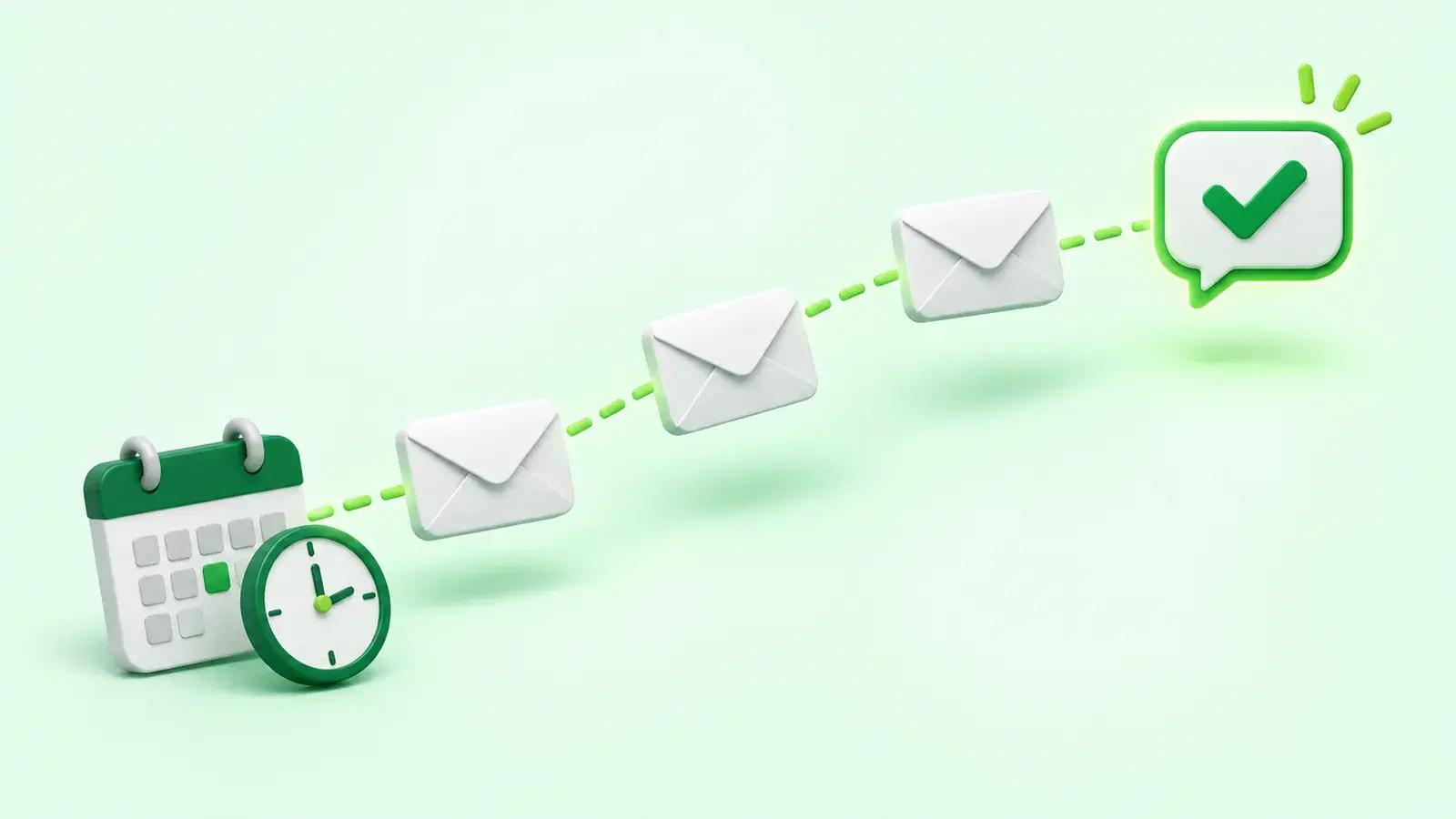
- 4Set the timing
Roughly days 1, 4 and 10, sent on business days in the prospect's time zone.
- 5Set the stop rules
Stop on any real reply, bounce or unsubscribe. An out-of-office auto-reply isn't an answer: push the next step back instead of stopping.
- 6Measure and adjust
Watch replies, bounces and unsubscribes for each step, and rewrite the step that loses people.
Why follow-ups matter
People rarely ignore a relevant email on purpose; they miss it. A short, polite follow-up a few days later catches the ones who meant to reply. The key word is relevant: a follow-up can't rescue a message that was aimed at the wrong person, so get targeting right first.
A simple cadence to start with
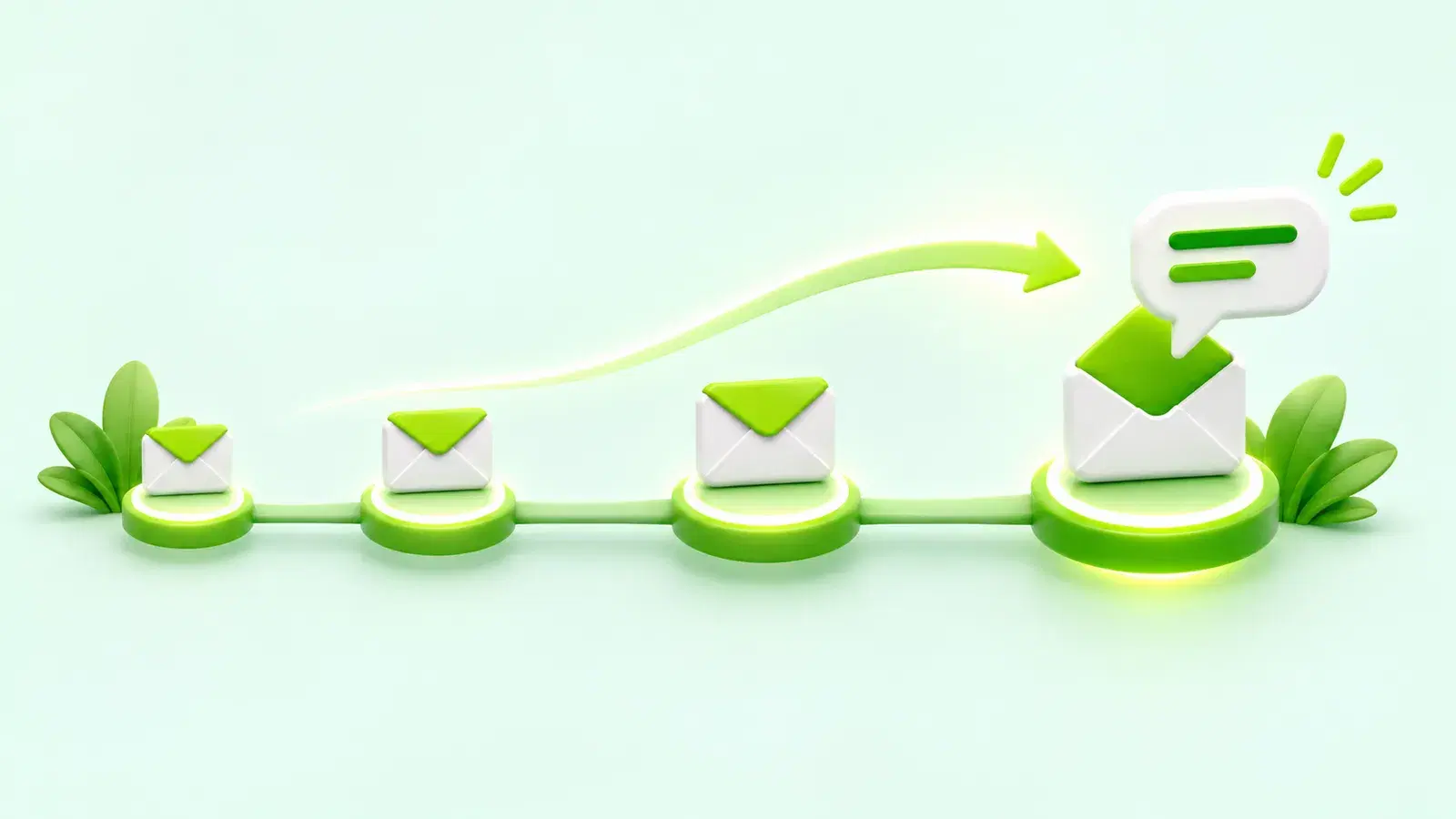
- 1Day 1: first touch
Lead with something specific about their company, then one clear, low-effort ask.
- 2Day 4: new angle
Not "just bumping this". Add a different reason it might matter to them.
- 3Day 10: break-up
Say you'll stop reaching out. Short, honest, no guilt.
- 4Day 70: revival
For leads who went quiet, reopen with fresh context about what's changed at their company.
Leads who go quiet after the break-up aren't lost forever. Circling back around 60–70 days later with fresh context about what's changed at their company often lands better than the original sequence did.
What each follow-up should say
| Touch | Goal | Avoid |
|---|---|---|
| First email | Earn attention with one specific, true observation and one small ask | Long intros, feature lists, a calendar link in line one |
| Follow-up | Give a new reason to reply: a different pain, an example, a quick idea | "Just bumping this to the top of your inbox" |
| Break-up | Close the loop politely and leave the door open | Guilt, sarcasm, fake urgency |
| Revival | Reopen with fresh, current context about their company | Re-sending the old email unchanged |
Thread follow-ups, and stop the moment they reply
- Send follow-ups as replies in the same thread, so the context sits right underneath.
- Stop the sequence automatically as soon as the lead replies. Out-of-office auto-replies are the exception: delay the next step until they're back.
- Keep each follow-up shorter than the one before it.
- Change the angle, not just the wording. A new idea gives them a reason to answer now.
In Stynar, follow-ups thread into the same conversation and stop on their own when a lead replies. Out-of-office auto-replies don't stop the sequence, and an AI classify step can push the next steps back three days. AI email steps can write each follow-up from the earlier thread so it adds a new angle instead of repeating itself. Campaigns send on the schedule and time zone you set, or you can have each email created as a draft in your own Gmail or Outlook and edit it before it goes. Starter allows up to 5 follow-up steps per sequence, Pro up to 15, and Scale unlimited.
Multi-touch outreach best practices
- Three or four touches is enough for most audiences. More than that rarely adds replies and adds complaints.
- Every touch needs its own reason to exist. If you can't say what's new in it, cut it.
- Keep each email shorter than the one before. The break-up can be three sentences.
- Space touches further apart as the sequence goes on, and widen the gaps for senior or busy buyers.
- If you also connect on LinkedIn or call, keep the message consistent across channels and don't send two touches on the same day.
- Send plain text from your own mailbox, and include an easy way to opt out. Gmail and Yahoo require one-click unsubscribe for bulk marketing mail and expect spam complaints below 0.3%.
How to automate follow-ups without sounding automated
- Automate the timing, threading and stop rules. Those are mechanical, and a tool does them more reliably than a person.
- Don't automate sameness. A follow-up that repeats the first email word for word reads like a bot; one that adds a new angle reads like a person.
- Personalise every step from what you know about the lead, not just the first email.
- Send inside working hours in the lead's time zone, at a steady daily volume per mailbox.
- Review replies yourself, or at least the ones that ask a question or want to meet.
| Part of the sequence | Automate it? | Why |
|---|---|---|
| Timing between steps | Yes | Consistent spacing, sent on schedule even when you're busy |
| Threading follow-ups | Yes | Keeps the earlier email right underneath for context |
| Stopping on reply, bounce or unsubscribe | Yes, always | The worst automation mistake is emailing someone who already replied |
| Writing each follow-up | With AI, from the thread | A new angle per lead without writing every email by hand |
| Replying to interested leads | Draft it, then check it | This is where deals are won or lost |
What to measure for each step
- Reply rate, and positive replies separately. A step that gets replies like "not interested" still tells you something.
- Bounce rate. If it rises, stop and clean the list before you send more.
- Unsubscribes and spam complaints. A step that drives them up needs rewriting or removing.
- Which step replies come from. If almost nobody answers the third touch, shorten the sequence.
Templates you can copy
We've published the first touch, follow-up, break-up and revival emails from this cadence as six plain-text templates, with the merge fields and where the AI-written paragraph goes. Find them in our post on B2B cold email templates.
Frequently asked questions
How do I create an effective cold email sequence?
Pick one well-targeted segment, write a short first touch that opens with something specific about the prospect, plan two or three follow-ups that each add a new angle, space them around days 4 and 10, and stop automatically on any reply, bounce or unsubscribe. Then measure each step and rewrite the one that loses people.
What are the best practices for multi-touch outreach sequences?
Keep it to three or four touches, give every touch a new reason to reply, make each one shorter than the last, widen the gaps as you go, thread follow-ups in the same conversation, and keep messages consistent if you also use LinkedIn or phone.
How do I automate follow-up sequences effectively?
Automate the mechanical parts (timing, threading, sending windows and stopping on reply) and keep the content fresh. Write each follow-up with a new angle, ideally personalised from the earlier thread, and review replies from interested leads yourself.
Should follow-ups be sent in the same email thread?
Yes. Replying in the same thread keeps your earlier email right underneath, so the lead has the context without searching for it.
How many follow-up emails should I send?
Two or three follow-ups after the first email is a sensible default. Make each one add something new, and always stop as soon as the person replies.
How long should I wait between follow-ups?
Start with about three days before the first follow-up and around a week before the next. Busy or senior audiences deserve longer gaps.
What is a break-up email?
The last email in a sequence, saying you'll stop reaching out. Because it removes the pressure, it often gets replies the earlier emails didn't.